

Solar Panel Articles
by R&B Mechanical & Electrical
What are the planning rules for installing solar panels in UK National Parks?
The drive towards renewable energy has made solar panel installation a popular choice for homeowners and businesses across the UK. However, for those living within one of the UK’s stunning National Parks, the process is a little more complex. Here, a second tier of planning regulation exists to protect the unique and cherished landscapes that define these special areas.
Why Do National Parks Have Stricter Planning Rules?
The UK’s National Parks are not wildernesses. They are living, working landscapes that have been shaped by generations of human activity. The purpose of a National Park Authority, as defined by the Environment Act 1995, is twofold: to conserve and enhance the natural beauty, wildlife, and cultural heritage of the area, and to promote public understanding and enjoyment of its special qualities.
To achieve these aims, National Park Authorities are designated as the sole local planning authority for their areas. This gives them the power to implement planning policies that are often more restrictive than those found elsewhere. The stricter regulations are in place to ensure that any new development, from a small extension to a large-scale project, respects and enhances the special character of the landscape. When there is a conflict between conservation and enjoyment, the principle of conservation (known as the Sandford Principle) takes precedence. This means that a proposed development, while potentially beneficial, may be refused if it is deemed to have a detrimental effect on the landscape or scenic beauty of the park.
Solar Panel Planning Rules: The General Picture
Outside of National Parks, many domestic solar panel installations are considered “permitted development,” meaning they don’t require a full planning application, as long as they meet specific criteria. These criteria typically include limitations on the panels’ height, their projection from the roof, and their location on a flat roof.
Within a National Park, however, these permitted development rights are often restricted. While it’s not impossible to install solar panels, you will almost always need to consult the National Park Authority for advice and, in most cases, submit a planning application. The key principle is to ensure the installation minimizes the visual impact on the landscape.
General rules that apply across most National Parks for solar panels include:
- Visibility is a primary concern: Planning authorities will give “great weight” to conserving and enhancing scenic beauty. This means they will carefully consider the visibility of the panels from public highways and other key viewpoints.
- A “landscape-led approach”: You are expected to demonstrate how your installation respects and is informed by the unique character of the surrounding landscape.
- Minimizing visual impact: The design and location of the panels are crucial. Authorities often recommend:
- Using panels with a colour and finish that blends with the roof and surrounding buildings. Black-framed or frameless panels are often preferred.
- Arranging panels in a neat, symmetrical pattern.
- Installing “in-roof” systems that sit flush with the roofline, rather than “on-roof” systems that are mounted on top.
- Avoiding installation on the main, most visible elevation of a building.
- Removal when no longer needed: A condition of approval is often that the panels must be removed as soon as they are no longer required.
Ground-Mounted vs. Roof-Mounted Installations
The distinction between roof-mounted and ground-mounted systems is significant in National Parks.
- Roof-mounted systems are generally more accepted, as they are often less visible and can be integrated more sympathetically into the existing building. However, they are still subject to strict design and placement conditions to minimize their visual impact.
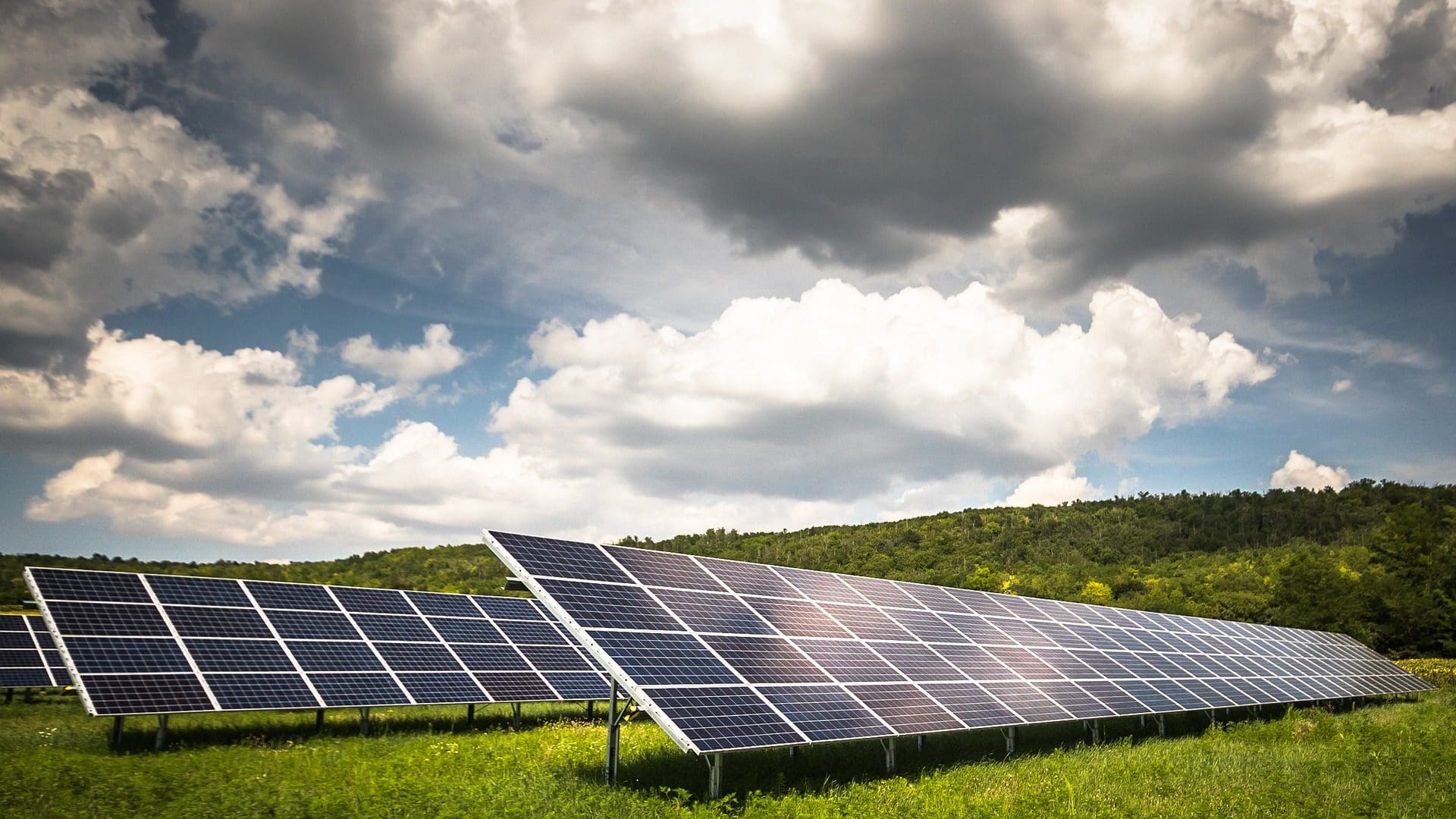
- Ground-mounted arrays, especially large ones, are far more likely to require full planning permission. Outside of National Parks, a single, small ground-mounted array (under a certain size and height) can often be installed without planning permission. Within a National Park, the potential visual impact of a ground-mounted system on the open landscape is a major concern. Any large-scale ground-mounted solar project will be subject to a rigorous examination and must be justified by “exceptional circumstances” and demonstrate a clear “public interest,” in addition to meeting strict design criteria to screen the installation from view.
Differences for Commercial, Agricultural, and Residential Installations
The type of property also plays a crucial role in the planning process:
- Residential: For a domestic property, the focus is on integrating the panels into the existing dwelling in a way that doesn’t detract from the building’s or the area’s character. You will need to apply for householder planning permission if your installation does not fall under the restricted permitted development rights.
- Agricultural: Farmers and landowners may want to install solar panels on barns or as a ground array to power their operations. While National Park Authorities are keen to support sustainable rural economies, any installation must still meet the landscape conservation criteria. The scale of the installation will be a key factor. A small array on a barn roof is more likely to be approved than a large, highly visible ground array.
- Commercial: For businesses, a full planning application is almost always required. The size and scale of a commercial solar installation will inevitably have a greater visual impact, and the application will need to be supported by a detailed plan demonstrating how the project will be designed and sited to minimize its effect on the landscape.
Significant Differences Between National Park Areas: Yorkshire Dales and The Lake District
While the overarching principles of stricter planning controls apply across all UK National Parks, subtle variations and specific emphases can exist between individual Park Authorities, reflecting their unique landscapes and priorities.
- The Yorkshire Dales National Park
-
- The Yorkshire Dales National Park Authority (YDNPA) places a strong emphasis on preserving the distinctive character of its traditional stone-built settlements and the open, dramatic fells.
- For solar panels, their guidance will likely reiterate the need for careful siting to minimise visual intrusion, particularly on historic buildings or those visible from iconic landscapes.
- The YDNPA provides a “Householder Enquiry Form – Renewable energy” which specifically asks for details like the protrusion of the panels, their location (front/rear roof slope, wall, freestanding), and whether they will be visible from a highway. This pre-application advice service is highly recommended to ascertain if planning permission is needed and to understand the specific requirements.
- They will expect detailed plans showing how the panels integrate with the existing roofline and materials, and how any associated equipment will be screened.
- The Lake District National Park
-
- As a UNESCO World Heritage Site, the Lake District National Park (LDNPA) has an even heightened level of protection. Its stunning fells, lakes, and picturesque villages demand an exceptionally sensitive approach to development.
- The LDNPA’s guidance for solar panels explicitly suggests:
- Colour and Finish: Choosing colours and finishes that blend with the roof and surrounding buildings.
- Framing: Preferring frameless or black-framed panels.
- Symmetry: Laying panels in a symmetrical pattern, even if it means relocating aerials or flues.
- Size: Suggesting panels cover the entire roof of a building for a more integrated look, rather than a fragmented appearance.
- In-roof vs. On-roof: Prioritising in-roof panels where possible.
- Visibility: Strongly advising against fitting panels to the main elevation of the roof, especially if visible from common viewpoints.
- The LDNPA, like the YDNPA, encourages pre-application discussions. Given its World Heritage Site status, proposals in the Lake District may face even more stringent requirements for demonstrating minimal impact on the “Outstanding Universal Value” of the site.
Conclusion
In conclusion, while the drive towards renewable energy is vital, installing solar panels within a UK National Park requires a thoughtful and informed approach. The additional layer of regulation is a consequence of protecting landscapes that are not just beautiful, but also living, working environments with a unique heritage. Engaging early with the relevant National Park Authority, understanding their specific guidelines, and designing installations that are sympathetic to the unique character of these areas are crucial steps for a successful solar power project in these protected landscapes.

Our Services
Commercial Solar Panels
We have designed and installed high yield commercial solar panel systems for many clients. We can provide all design and payback calculations and ongoing maintenance.
Agricultural Solar Panels
We have many years experience designing and installing agricultural solar panel systems for farm businesses and saving them huge costs on electrical energy.
Residential Solar Panels
Our design and solar panel installation engineers have over a decade of experience installing and maintaining solar PV systems for residential customers across the UK
Electrical Contractors
We are NICEIC registered electrical contractors and members of the Electrical Contractors Association for all industrial, commercial and residential electrical services including testing, inspection and compliance services.
Mechanical Services
We offer M&E design, calculation, estimation and full fit-out, installation and maintenance services to commercial clients. We also provide contract maintenance and building compliance and testing services
Solar Renewables
We are MCS and RECC registered solar panel installers for all commercial and residential solar panel installations including ground arrays and roof mounted PV systems and battery storage configurations.
EV Home Chargers
We fit all makes, models and types of EV Chargers for residential customers. We are Office for Zero Emission Vehicles (OZEV) authorised installers.
EV Workplace Chargers
We can undertake all required aspects of commercial EV charging point installation, from initial design and consultation to servicing and on-going maintenance.
Gas Boiler Engineers
We are Gas Safe Registered and undertake boiler installation, servicing and all gas safety checks for landlords and residential customers.
Solar Panel Installer
Photovoltaic Systems generate no greenhouse gases, a typical domestic system can save approximately 1.2 tonnes of carbon dioxide emissions per year – adding up to almost 30 tonnes over a system’s lifetime.
Our design and solar panel installation engineers have many years experience installing solar PV systems for industrial and commercial clients.
Contact Us
Solar Panel Enquiry
Address
Keighley, West Yorkshire
BD21 4PF
UK
What3Words
What3Words:///clocks.decide.pokers
Phone
Keighley: 01535 687010 Skipton: 01756 793039