

Solar Panel Articles
by R&B Mechanical & Electrical
The Future of Solar Panels in the UK
The UK’s Solar Future: A Brighter Outlook? ☀️
The UK’s journey towards a greener energy mix has seen solar power play an increasingly important role. With a growing desire for energy independence and a focus on combating climate change, many are wondering what the future holds for solar panels in the UK. This article explores the current state of solar installations, predicted technological breakthroughs, and the potential for a revolution in how we power our homes and businesses.
Current Trends: Continued Growth, but at a Different Pace
The UK has seen a remarkable surge in solar panel installations over the past decade. After an exponential increase from 2010 onwards, a period driven by the now-defunct Feed-in Tariff (FiT) scheme, the growth rate has changed. While installations are still rising, they aren’t increasing at the same rapid pace as during the FiT era. Nevertheless, the trend is projected to continue, with a significant increase in installations on new builds. The total number of homes with solar panels has surpassed 1.5 million, a testament to the technology’s growing popularity.
The Next Generation of Solar: Efficiency and Affordability
Future advancements in solar technology are set to be genuine game-changers, offering both increased power output and lower costs.
Technical Innovations
- Perovskite Tandem Solar Cells: This is arguably the most exciting development. By layering a perovskite cell on top of a traditional silicon cell, manufacturers can create a “tandem” cell that captures a wider spectrum of sunlight. This can lead to a significant increase in efficiency, with some laboratory tests achieving efficiencies over 33%. These cells could mean more energy from less roof space.
- Bifacial Solar Panels: These panels can capture sunlight from both their front and back sides. While they’ve been around for a while, advancements in their design and manufacturing are making them more widely available and effective. In suitable environments (such as flat roofs or ground-mounted systems with reflective surfaces), bifacial panels can generate considerably more power than their single-sided counterparts.
- Transparent and Flexible Panels: Imagine windows that double as solar panels or solar cells so light and flexible they can be integrated into building materials or even clothing. While still in development, these technologies could open up a new world of installation possibilities, particularly in urban areas with limited roof space.
Design and Installation Cost Reductions
Costs are not just about the panels themselves. Innovations in other areas are also helping to reduce the overall investment.
- “Soft Costs” Reductions: A significant portion of solar installation costs comes from “soft costs” — things like permitting, labour, and administrative fees. New software and digital tools, including automated permitting systems and remote site assessment software, are helping to streamline these processes.
- Modular and Integrated Systems: The shift towards more integrated designs, where solar panels and other components are designed to work seamlessly together, can simplify the installation process, reduce labour time, and lower overall system costs.
The Economics of Solar: A Complex Picture
The future cost of solar panel systems is a balancing act between competing forces. On one hand, global manufacturing scale and competition drive prices down. On the other, the cost of raw materials and geopolitical factors can push them up.
- Economies of Scale vs. Raw Material Costs: While the cost of solar panels has plummeted over the last decade, recent years have seen a rise in costs due to increasing prices for commodities like polysilicon, steel, and copper. However, the long-term trend points towards decreasing costs as manufacturing processes become more efficient and global production scales up. The UK’s potential for higher adoption could also drive prices down through local competition among installers.
- The Manufacturing Conundrum: The solar industry faces a perception problem regarding its environmental impact. The manufacturing process, particularly the production of polysilicon, is energy-intensive and often relies on fossil fuels in major manufacturing hubs like China. The heavy concentration of production in a limited number of countries, predominantly China and other parts of Asia, also creates supply chain vulnerabilities. As the industry matures, there’s a growing focus on more sustainable manufacturing practices and the development of local supply chains in other parts of the world, including Europe.
The Battery Storage Revolution
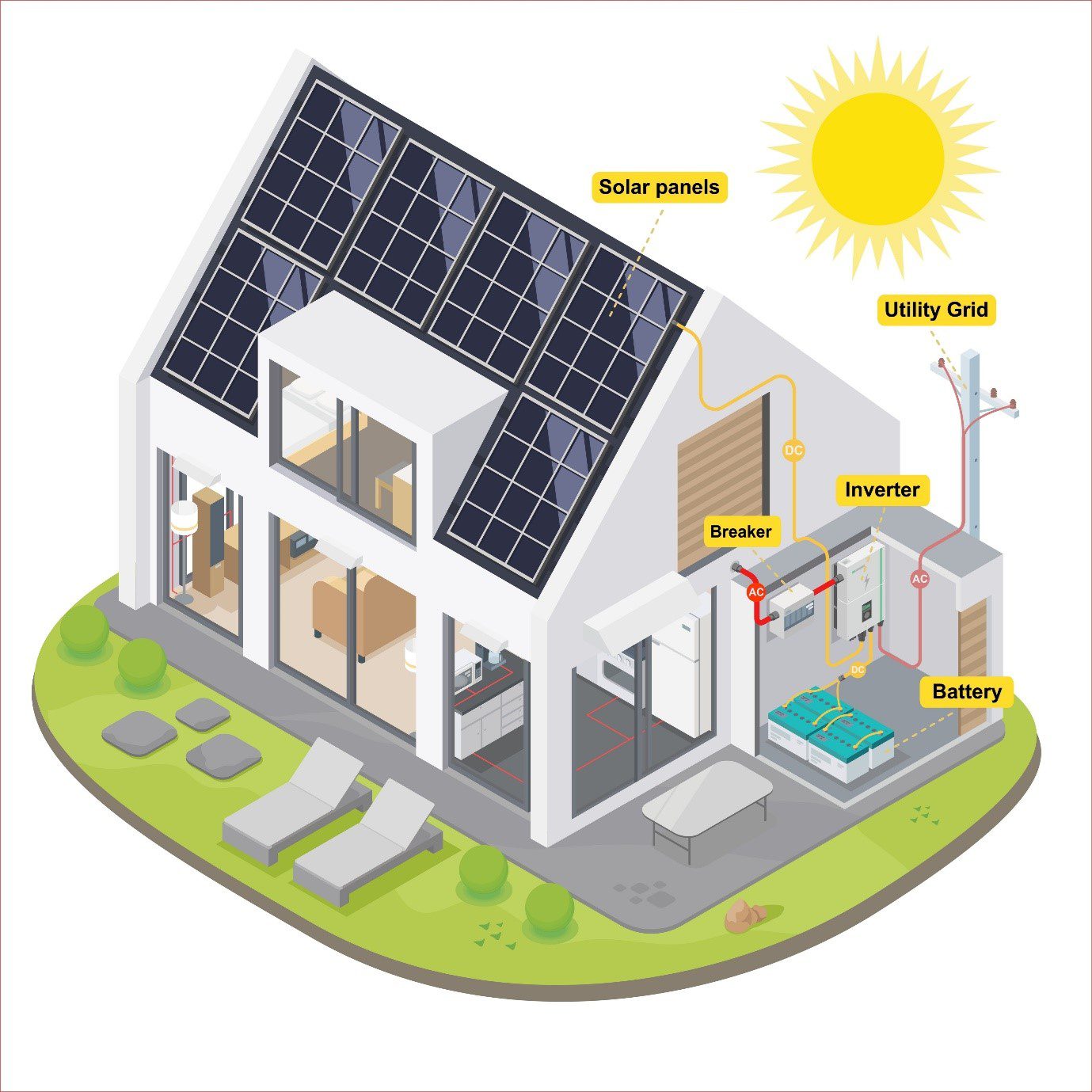
For solar panel systems to reach their full potential, improvements in battery storage are crucial. A robust and efficient battery system is a true game-changer, turning a solar installation from a daytime energy source into a 24/7 power solution.
- What’s needed: A revolution in battery technology requires improvements in several key areas. We need batteries with:
- Higher Capacity and Longevity: The ability to store more energy and last for a longer operational lifespan.
- Faster Charging and Discharging: The ability to absorb and release energy quickly to meet fluctuating demand.
- Lower Costs: A significant reduction in the price of batteries to make them a more accessible and cost-effective addition for all homeowners and businesses.
- Improved Efficiency: Minimizing energy loss during the charging and discharging cycles.
- How it would be achieved: The key to these improvements lies in ongoing research into new materials and battery chemistries. While lithium-ion is the current standard, next-generation technologies like solid-state batteries and alternative chemistries are being developed to offer greater energy density, enhanced safety, and lower manufacturing costs. While some of these technologies are still in their early stages, it’s highly likely that significant improvements will be seen in the near future, potentially within the next 5-10 years.
- The Impact: With improved battery storage, homeowners and businesses could store all their excess solar energy generated during the day and use it at night. This would dramatically reduce their reliance on the grid, offer protection from power outages, and allow them to take full advantage of “time-of-use” tariffs, selling power back to the grid during peak demand for a higher price.
Government Policy: Incentives and the Future of Support
Government policy plays a vital role in shaping the future of the solar industry. In the UK, the landscape has shifted from the generous FiT scheme to the Smart Export Guarantee (SEG).
- Current Incentives: The UK government currently offers a 0% VAT rate on the installation of energy-saving materials, including solar panels, for residential properties until 2027. This provides a direct cost saving on the initial investment. The Smart Export Guarantee (SEG) requires large energy suppliers to offer a tariff for the electricity that customers export back to the grid. While the rates are often lower than the FiT, it provides a means for solar owners to earn money from their surplus energy.
- Future Changes: While there are no current announcements of a new large-scale subsidy scheme, there is a strong push for a more ambitious long-term strategy. Potential future changes could include new grants and financial support for solar battery storage, as well as a greater focus on integrating solar into the planning and construction of new homes. The continued support for schemes like the SEG and a 0% VAT rate is crucial for maintaining the momentum of solar adoption.

Our Services
Commercial Solar Panels
We have designed and installed high yield commercial solar panel systems for many clients. We can provide all design and payback calculations and ongoing maintenance.
Agricultural Solar Panels
We have many years experience designing and installing agricultural solar panel systems for farm businesses and saving them huge costs on electrical energy.
Residential Solar Panels
Our design and solar panel installation engineers have over a decade of experience installing and maintaining solar PV systems for residential customers across the UK
Electrical Contractors
We are NICEIC registered electrical contractors and members of the Electrical Contractors Association for all industrial, commercial and residential electrical services including testing, inspection and compliance services.
Mechanical Services
We offer M&E design, calculation, estimation and full fit-out, installation and maintenance services to commercial clients. We also provide contract maintenance and building compliance and testing services
Solar Renewables
We are MCS and RECC registered solar panel installers for all commercial and residential solar panel installations including ground arrays and roof mounted PV systems and battery storage configurations.
EV Home Chargers
We fit all makes, models and types of EV Chargers for residential customers. We are Office for Zero Emission Vehicles (OZEV) authorised installers.
EV Workplace Chargers
We can undertake all required aspects of commercial EV charging point installation, from initial design and consultation to servicing and on-going maintenance.
Gas Boiler Engineers
We are Gas Safe Registered and undertake boiler installation, servicing and all gas safety checks for landlords and residential customers.
Solar Panel Installer
Photovoltaic Systems generate no greenhouse gases, a typical domestic system can save approximately 1.2 tonnes of carbon dioxide emissions per year – adding up to almost 30 tonnes over a system’s lifetime.
Our design and solar panel installation engineers have many years experience installing solar PV systems for industrial and commercial clients.
Contact Us
Solar Panel Enquiry
Address
Keighley, West Yorkshire
BD21 4PF
UK
What3Words
What3Words:///clocks.decide.pokers
Phone
Keighley: 01535 687010 Skipton: 01756 793039