
Solar Panel Articles
by R&B Mechanical & Electrical
Is My Industrial Roof Strong Enough for Solar Panels?
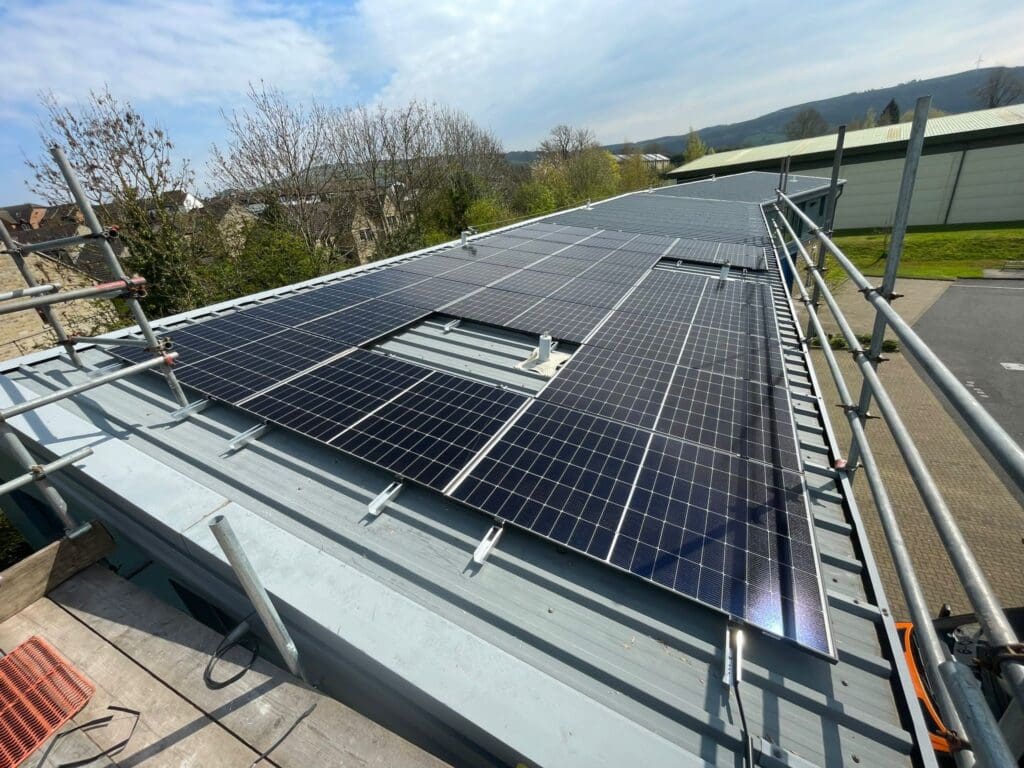
Investing in commercial solar panels is a smart business decision, offering significant long-term savings and a strong commitment to sustainability. However, before any installation can begin, the structural integrity of your industrial unit’s roof must be assessed. This critical step ensures not only the longevity of your solar investment but, more importantly, the safety of the building and the installation team.
- Establishing Roof Strength: The Structural Assessment Process
How is it determined that your industrial roof is sufficiently strong for the added load of a commercial solar photovoltaic (PV) system?
A solar PV installation adds weight to your roof, including the panels themselves, the mounting system, and the associated cabling. This load must be safely supported, even under adverse weather conditions like heavy snow or high winds, in compliance with UK building regulations.
What Does the Assessment Involve?
The assessment is carried out by a qualified structural engineer. It is a detailed process that typically includes:
- Desk Study: Reviewing the original building plans, specifications, and design calculations (if available) to understand the roof’s intended load-bearing capacity.
- Site Inspection: A physical inspection to assess the current condition of the roof structure, looking for any signs of degradation, corrosion, or previous damage.
- Load Calculation: The engineer calculates the dead load (weight of the solar system), live load (e.g., maintenance personnel), and environmental loads (wind uplift and snow) and compares the total load against the roof’s capacity.
- Structural Report: The engineer provides a report detailing whether the existing roof is adequate or if strengthening work is required.
Who is Responsible for the Structural Assessment?
The ultimate responsibility for commissioning and providing a satisfactory structural assessment typically rests with the client/building owner.
However, as a commercial solar panel installer, we have a professional and legal obligation to ensure that this assessment has been carried out by a competent person (the structural engineer) and that you have sighted the necessary certification before installation begins. We will never proceed with an installation on an industrial roof without this critical documentation. Our company’s reputation and insurance liability depend on it.
Required Certification
The crucial document required to demonstrate that the necessary checks have been carried out is the Structural Integrity Report or Structural Survey Report from the qualified engineer. This report confirms that the roof structure can safely support the proposed solar PV system for its intended lifespan.
- Fragile Roofs: A Critical Health and Safety Concern
One of the most serious risks in industrial solar installation is the presence of fragile roofs. These are roofs that were not designed to support the weight of a person or are constructed from materials that have become brittle or weak over time.
Common examples of potentially fragile roofing materials in older UK industrial units include:
- Asbestos Cement: Highly prevalent in post-war industrial buildings. The material becomes extremely brittle with age.
- Single-Skin Fibre Cement: Often found in older industrial sheds.
- Unprotected Rooflights: Polycarbonate or GRP rooflights can become degraded by UV light, making them structurally unsound.
The Health and Safety Risk
The presence of a fragile roof poses a severe fall hazard—the leading cause of fatalities in the construction industry. As a solar installer, the safety of your installation engineers is paramount.
Under the Working at Height Regulations 2005, you have a legal duty to prevent falls. If a roof is deemed fragile and cannot be safely accessed (even for the assessment), a specialist access and safety plan must be put in place, or the site may be deemed unsuitable for a roof-mounted system.
- Mounting Systems and Roof Weaknesses
Can the right mounting system alleviate weaknesses in older industrial roofing systems to allow for solar panel installation?
The mounting system’s primary role is to fix the panels securely and distribute the load evenly. While innovative mounting solutions exist, no mounting system can compensate for a structurally inadequate or degraded roof.
| Mounting System Type | Description | Application/Note |
| Penetrative (or Ballasted) Systems | Systems that are bolted directly through the roofing material and into the main structural purlins/trusses. | Best for load distribution. Requires precise connection to the strongest part of the roof structure. |
| Non-Penetrative (Ballasted) Systems | Uses weights (ballasts) placed on the roof to hold the array down, relying on friction. | Avoids roof leaks. Only viable if the roof can safely support the heavy ballast weight on top of the solar system load. Less suitable for high-wind areas. |
| Trapezoidal Clamping Systems | Uses special clamps that grip the peaks of trapezoidal metal sheeting without penetrating the roof. | Good for standing seam metal roofs. Distributes load across the sheet. Still requires the roof sheeting and purlins to be strong enough. |
The crucial point remains: If the structural engineer’s report states the roof is not strong enough, it is generally not advisable to install solar panels without first carrying out the necessary strengthening works (e.g., adding or reinforcing purlins). Attempting to “alleviate weaknesses” with a mounting system alone is a dangerous proposition that puts the building, the installation team, and your business at risk.
- Realistic Alternative Options for Commercial Solar
If a structural assessment confirms your industrial roof is unsuitable for a PV array, or if strengthening works are cost-prohibitive, there are realistic alternative options to still benefit from commercial solar power:
- Ground-Mounted Systems (Solar Farms):
- Viability: Ideal for clients with surplus unused land adjacent to their industrial unit.
- Benefit: Offers maximum flexibility in orientation and pitch for optimum energy generation and completely bypasses the roof strength issue. Requires planning permission and sufficient land area.
- Solar Carports/Canopies:
- Viability: Utilising existing or newly built car parking spaces to create covered parking that also generates electricity.
- Benefit: A dual-purpose solution that provides shelter for staff/customer vehicles while generating power. The system is supported by dedicated, ground-anchored steel structures.
- Solar on Outbuildings
- Solar on Outbuildings: Consider utilising the roof of a separate unit, warehouse, or other outbuilding on your site. These roofs may be more suitable or easier to reinforce than your main industrial unit.
We hope this information serves as a clear guide to the critical first step in your commercial solar journey. Prioritising structural safety is not just a regulatory hurdle; it’s an assurance of a safe, durable, and highly successful solar investment.

Our Services
Commercial Solar Panels
We have designed and installed high yield commercial solar panel systems for many clients. We can provide all design and payback calculations and ongoing maintenance.
Agricultural Solar Panels
We have many years experience designing and installing agricultural solar panel systems for farm businesses and saving them huge costs on electrical energy.
Residential Solar Panels
Our design and solar panel installation engineers have over a decade of experience installing and maintaining solar PV systems for residential customers across the UK
Electrical Contractors
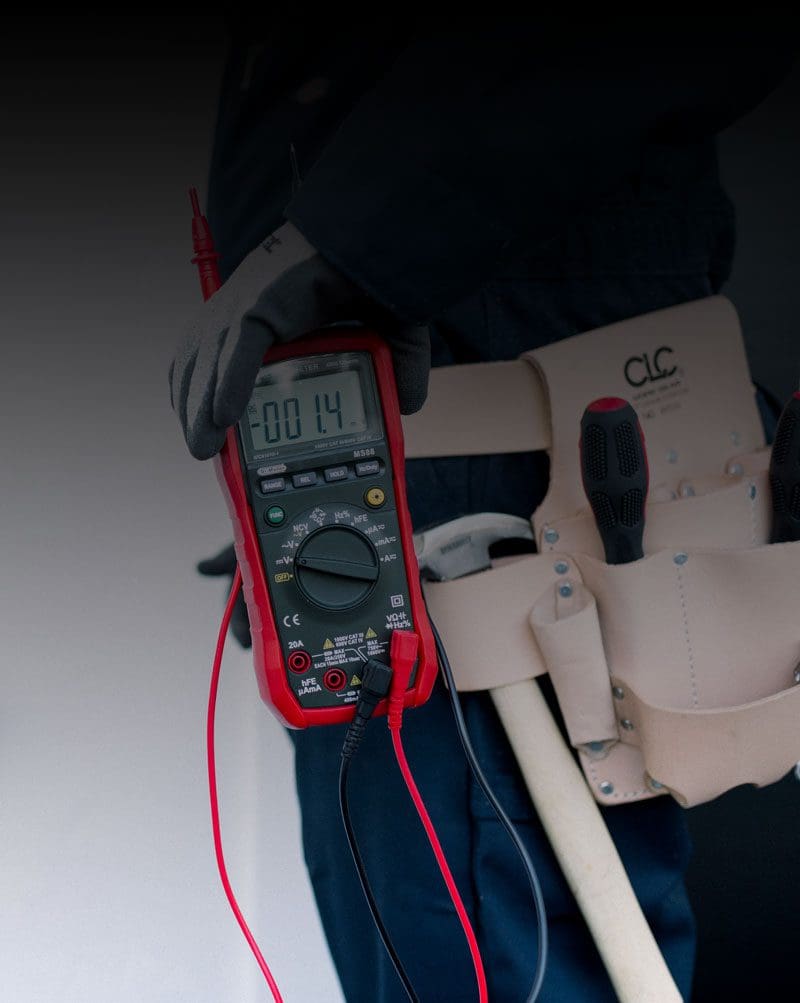
We are NICEIC registered electrical contractors and members of the Electrical Contractors Association for all industrial, commercial and residential electrical services including testing, inspection and compliance services.
Mechanical Services
We offer M&E design, calculation, estimation and full fit-out, installation and maintenance services to commercial clients. We also provide contract maintenance and building compliance and testing services
Solar Renewables
We are MCS and RECC registered solar panel installers for all commercial and residential solar panel installations including ground arrays and roof mounted PV systems and battery storage configurations.
EV Home Chargers
We fit all makes, models and types of EV Chargers for residential customers. We are Office for Zero Emission Vehicles (OZEV) authorised installers.
EV Workplace Chargers
We can undertake all required aspects of commercial EV charging point installation, from initial design and consultation to servicing and on-going maintenance.
Gas Boiler Engineers
We are Gas Safe Registered and undertake boiler installation, servicing and all gas safety checks for landlords and residential customers.
Solar Panel Installer
Photovoltaic Systems generate no greenhouse gases, a typical domestic system can save approximately 1.2 tonnes of carbon dioxide emissions per year – adding up to almost 30 tonnes over a system’s lifetime.
Our design and solar panel installation engineers have many years experience installing solar PV systems for industrial and commercial clients.
Contact Us
Solar Panel Enquiry
Address
Keighley, West Yorkshire
BD21 4PF
UK
What3Words
What3Words:///clocks.decide.pokers
Phone
Keighley: 01535 687010 Skipton: 01756 793039